
One in two candidates fails the driving theory test on their first attempt. Contrary to popular belief, mastering the theory does not guarantee success in practical driving. Some driving schools impose waiting times to access lessons, while others offer accelerated courses, but often at high prices.
With regular reforms of the test and the proliferation of online platforms, preparation processes are becoming more complex. Traditional methods now coexist with digital tools, disrupting habits and strategies for success.
Understanding the basics: what every future driver should know before starting
Before even considering choosing a driving school, every future driver faces a necessary step: gathering, without forgetting anything, the documents required to create a complete file. An up-to-date identity card, proof of residence, and sometimes a medical certificate, depending on the category of license sought. The slightest error or omission can prolong the process. In France, the administration does not overlook anything, and each missing document can delay the start of training.
The financial question also arises early. The amount to budget depends on the number of driving hours, the choice between classic, accompanied, or supervised formulas, and varies significantly from one driving school to another. There are ways to reduce the bill: the CPF, certain public or regional aids. Before signing, always request a detailed quote and read the conditions carefully: number of included hours, additional fees, follow-up procedures, distribution between theory and driving.
For some profiles, preparation does not stop there. After a cancellation or suspension, for example, one must undergo a psychotechnical test for the license. This assessment will notably evaluate the ability to resume driving safely. It’s best to prepare seriously: test structure, examiner expectations, process, every detail counts.
Motorcycle license candidates face additional requirements: complete safety gear (approved helmet, gloves, jacket, high-top shoes) and strict adherence to the framework of the probationary license, particularly regarding speed or point capital. All these steps, both administrative and material, form the foundation of serious and organized preparation.
How to effectively prepare for the driving theory test without unnecessary stress?
Revising the driving theory is not just about cramming rules into your head. You need to internalize the signage, understand priorities, and integrate road safety logic. Accumulation alone is not enough: regular work makes the difference, much more than intensive sessions right before the deadline.
To progress effectively, it is recommended to focus on short, frequent, and targeted revisions. Memory works through spaced repetition. Multiple-choice questions, series drawn from the official bank, allow for practice in conditions close to the exam. With online tools, everyone can progress at their own pace, without constraints of schedules or travel.
The topics of the theory are numerous. To leave nothing to chance, it is wise to vary the revisions. One week for priorities, another for signage, then sanctions, eco-driving, or basic first aid. This segmented approach facilitates learning and allows for precise identification of areas to work on. By tracking your results, you can focus your efforts on real weaknesses.
Stress, on the other hand, is not inevitable. A few simple techniques can keep it at bay: deep breathing, taking breaks, visualizing the test process. Over time, confidence replaces apprehension. You then approach the big day with solid foundations and a clear mind.
Concrete tips to make the most of driving lessons and succeed on the big day
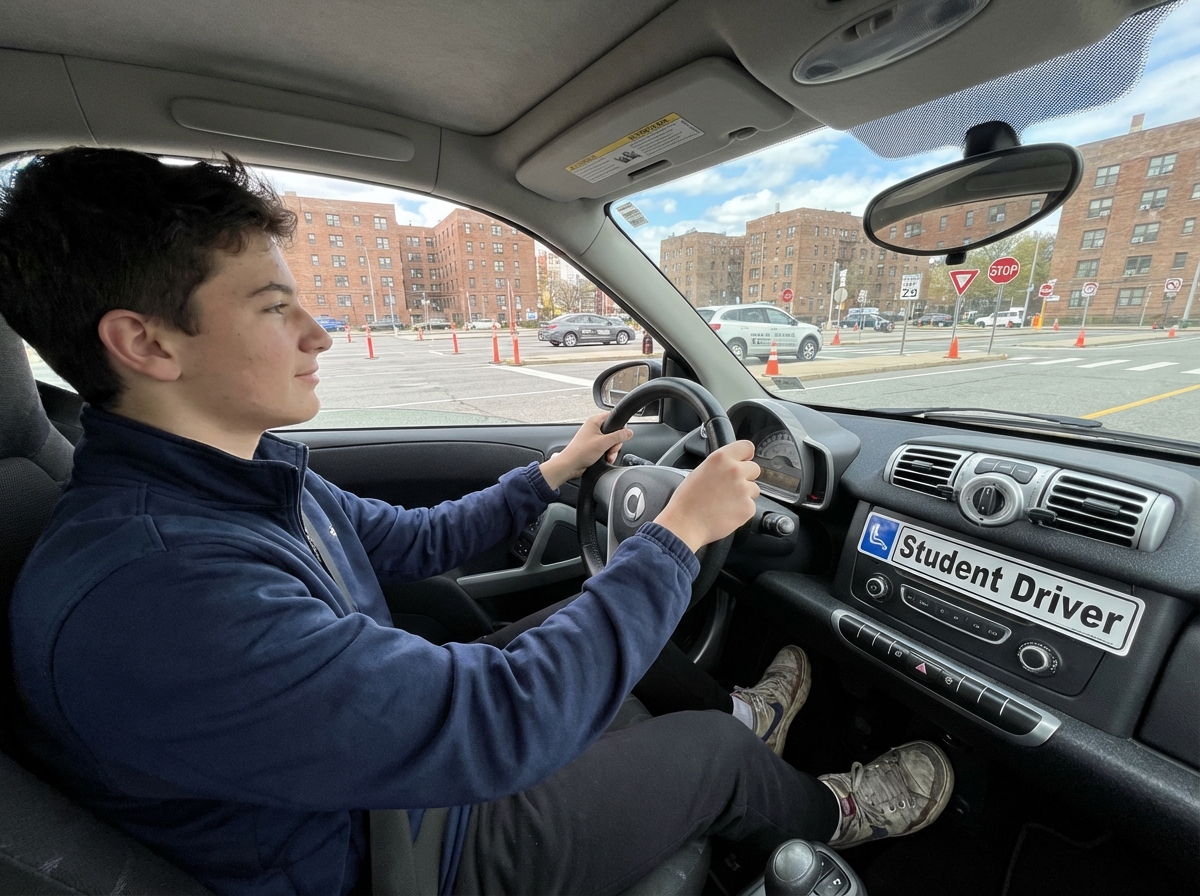
Driving is not learned from books. Every hour spent behind the wheel counts. From the first lesson, get actively involved: question the instructor, analyze what unsettles you, note every difficulty. It is through practice and exchange that you progress the fastest.
Regularity is an asset for ingraining good reflexes. Too much spacing between sessions promotes forgetfulness, while a steady rhythm facilitates the memorization of maneuvers and confidence behind the wheel. Also, prepare for what the examiner expects: mastery of visual checks, respect for safety distances, speed management. Nothing is left to chance during the test.
To prepare as best as possible, here are some concrete areas to explore during your training:
- Vary your routes: city center, outskirts, country roads. The more contexts you experience, the more comfortable you will be on test day.
- Ask your instructor to simulate certain exam situations: parking, starting on a slope, merging onto a highway. This helps to overcome blocks and gain fluidity.
- Don’t seek performance at all costs. Regularity and mastery of actions take precedence over speed of execution. It is the repetition of sure reflexes that reduces stress on the big day.
The final stretch before the practical exam often hinges on the details. Arrive early at the center, take a moment to breathe and concentrate, avoid frantically rereading your notes. The day you receive your provisional driving certificate will be precisely because you managed to combine rigor, preparation, and confidence in your skills. That combination, no one can take away from you.