
Some combinations of colors that are considered incompatible nonetheless create balanced spaces, as long as the distribution of hues respects precise proportions. A room overloaded with personal items does not necessarily hinder the feeling of order if each element has a function or a coherent link with the whole.
The arrangement of furniture opposite traditional circulation paths sometimes leads to better use of space; blind adherence to classic layouts, on the contrary, results in setups that are poorly suited to current lifestyles. Accepted rules do not guarantee comfort or aesthetics, but their well-mastered exceptions transform the interior into a harmonious place.
Why harmony is essential in the layout and decoration of your home
Harmony in an interior design project is not just a matter of taste: it guides every step, from choosing colors to selecting materials. The coherence between elements, the echo between textures, the agreement between accessories: everything is orchestrated to establish an atmosphere that stands firm. An interior designer knows how to orchestrate this ensemble, navigate through styles—Scandinavian, minimalist, industrial, bohemian—and offer each space a story that holds up.
The interior decorator does not pile on current trends. Their work consists of weaving subtle connections between volumes, materials, and light. Interior decoration shapes harmony by taking into account the particularities of each room and the lifestyle rhythm of those who occupy it. An oversized sofa in a cramped living room, an overdose of patterns in a room dedicated to rest: harmony fades, and so does comfort.
Turning to professionals provides access to tailored solutions and specialized suppliers. Their expertise reduces the risk of error, maximizes every square meter, and gives meaning to every detail. For your home, coherence makes the difference: from the tone of a paint to the softness of a rug, from the light of a pendant to the texture of a curtain.
To delve deeper into these issues, learning more about Place A allows you to observe concrete examples from projects where layout and aesthetics interact to reveal the unique character of an interior.
What questions should you ask before rethinking each room?
Before any interior design project, it is essential to question the use: who lives here, how is the room utilized, what needs are expressed? A living room gathers and welcomes, a kitchen oscillates between practicality and conviviality, the bathroom requires clever storage.
Some concrete principles help structure the reflection:
- Using multifunctional furniture optimizes a limited space: a bed with storage, a modular table, a bookshelf serving as a divider.
- Opting for high storage frees up the floor, smooths circulation, and gives an impression of spaciousness.
- Installing light partitions, such as glass walls, curtains, or open bookshelves, allows for delineation without confinement, organization without heaviness.
- Light colors (white, beige) amplify light and make volumes breathe.
- Mirrors reflect light and visually stretch spaces.
Every detail counts in the success of a space: handle, light fixture, curtain. Using 3D modeling provides an overview and avoids unpleasant surprises. Defining a precise budget helps focus on essentials and structure the work. Investing in custom furniture allows you to take advantage of difficult corners, from a converted attic to under-stair storage. Rethinking the space means revisiting the organization, light, and comfort while maintaining a balance between aesthetics and functionality.
Concrete tips for creating a coherent, warm interior that reflects you
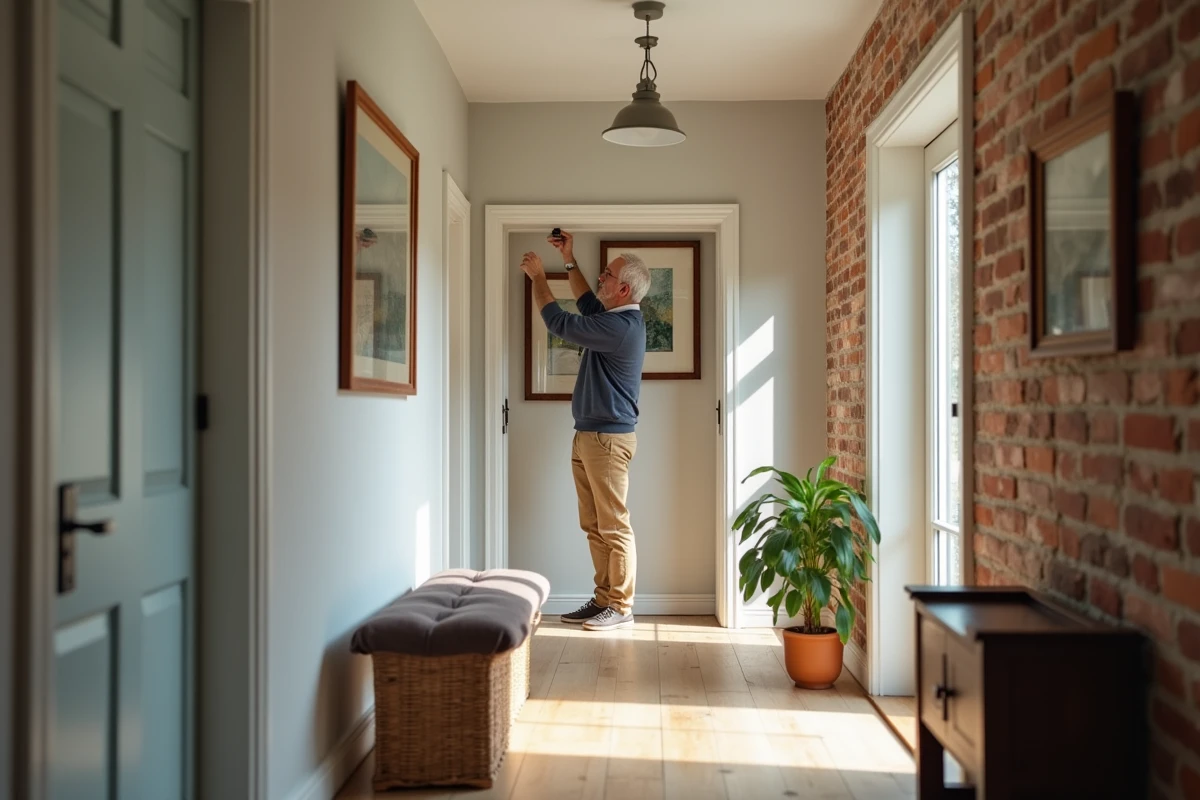
Visual coherence relies on a subtle dialogue between materials, colors, and accessories. To achieve an interior decoration that resembles you, build a palette of three dominant colors, accented with a few contrasting touches. Natural materials (wood, linen, rattan) infuse an authentic and serene atmosphere. A well-chosen rug delineates spaces without partitioning, while varied light fixtures sculpt light throughout the day.
Here are some simple ideas to implement:
- Hang pictures or personal artworks to give depth to your walls.
- Add a few plants: they bring life and improve air quality.
- Multiply decorative accessories, such as candle holders, sculptures, cushions, and throws, to warm the atmosphere without overwhelming it.
Decorative details give character: a graphic wallpaper on one wall, a colorful backsplash in the kitchen, a few door stickers are enough to transform the ambiance. Prioritizing custom solutions allows you to exploit atypical surfaces, such as a nook or a narrow hallway. Your personal items, books, photos, travel souvenirs, tell your story and eliminate uniformity, making each room unique and lively.
A harmonious interior does not rely on a collection of rules followed but on the ability to methodically challenge them. The home then becomes a field of expression, where every detail has its say and where balance is sensed as soon as the threshold is crossed.