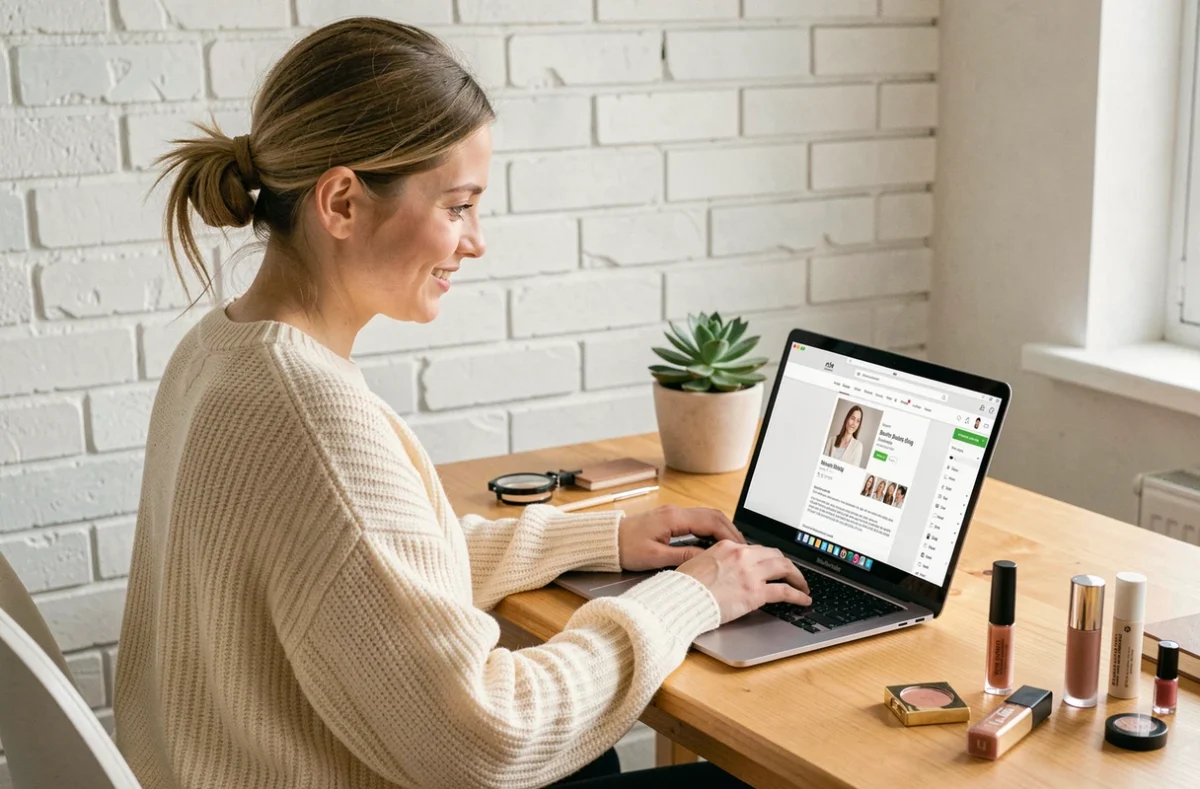
Most beauty blogs have a contact page, but few readers receive a useful response. The problem does not lie with the form: it stems from the chosen channel, the timing of the submission, and the wording of the message. Effectively contacting a beauty blog requires understanding how these platforms handle their incoming message flows.
Contact form, direct email, social media: which channel to prioritize for a beauty blog
A contact form integrated into the site remains the most reliable channel to reach a beauty blog. It ensures that the message arrives in the box dedicated to the blog, not in a notification thread drowned among Instagram alerts and promotional DMs.
Direct email, when published, also works. But many blogs no longer display it to limit spam. If the address is not visible, there’s no need to dig through the source code or legal notices: go through the form.
Social media (Instagram, TikTok, X) may seem accessible, but private messages are handled with a much longer delay. Beauty content creators receive dozens of DMs each day, mixing partnership requests, reader questions, and commercial solicitations. A message sent via the form is more likely to be read than a DM on Instagram.
For blogs that carefully structure their contact page, the process is straightforward. For example, you can access the contact page of Le Break Beauté and see that a well-designed form directs the request to the right person.
- Contact form on the site: priority channel, message archived and traceable for the blogger
- Direct email: effective if the address is published, but increasingly rare on recent beauty blogs
- Social media (DM): useful for a quick or informal exchange, but unsuitable for detailed questions about products or makeup routines
- Comments under articles: publicly visible, suitable for brief clarifications, not for personalized exchanges
Writing a message that gets a response from a beauty blog
The majority of unanswered messages share a common flaw: they are too vague. “Hello, I love your blog, can you advise me?” gives the blogger no basis to formulate a useful response.
An effective message contains a specific question and minimal context. Mention the product or article that motivates your question. Specify your skin type, your current routine, or the result you are looking for. The blogger does not have access to your history: give them the necessary elements in a few lines.
What to include in your message
A clear subject saves time on both sides. “Question about the foundation tested in your article from October 3” will be opened before “Hi, quick question”.
Limit your message to one or two questions. Beauty bloggers are not personal advisors: we observe that messages containing five distinct questions often go unanswered due to lack of time to respond properly.
Avoid asking for a complete list of products to buy. Several beauty blogs, including historical French references, explicitly mention this on their contact page. This type of request is equivalent to soliciting a free consultation.
Transparency and legal framework of exchanges with beauty creators
Contacting a beauty blog is not limited to asking questions about makeup or skincare. Some readers write to propose collaborations or product exchanges. The legal framework has evolved.
Since the ordinance of November 6, 2024, the commercial intent must be clearly and legibly indicated, including when the contact is made through social media. If you represent a brand and contact a blogger via their contact page, transparency about the commercial nature of your approach is not optional.
The contractual threshold to know
Decree No. 2025-1137 imposes a written contract when the cumulative remuneration and benefits in kind between a brand and a creator reach 1,000 euros excluding tax in a year. Offered products are included in this calculation. Contacting a beauty blog to send “a few free products” without formalization can expose both parties to regulatory non-compliance.
The ARPP certificate (Professional Advertising Regulatory Authority) is a relevant indicator. The 2026 Responsible Influence Observatory, based on nearly 25,000 contents, notes better transparency among certified creators. In the beauty sector, identified shortcomings concerned medical claims, sun protection, and insufficiently documented numerical results.
Personal data and GDPR: what you share via a beauty contact form
Each contact form collects at least an email address. On some beauty blogs, the form also asks for a first name, a phone number, or information about your skin. GDPR recommendations require collecting only the data strictly necessary for processing the request.
A form that requires your date of birth or postal address for a simple question about a makeup review should raise a red flag. The principle of data minimization applies: if the blog does not need information to respond to you, it should not ask for it.
We recommend checking for the presence of a privacy policy accessible from the contact page. Its absence does not automatically indicate abusive use, but it reflects a lack of rigor in managing personal data.
Protecting your exchanges
Use a dedicated email address if you regularly contact beauty blogs or online creators. Avoid sending personal photos via an unsecured form (HTTP instead of HTTPS). These precautions are common sense, but they remain poorly applied.
Contacting a beauty blog becomes more effective when the reader chooses the right channel, formulates a precise question, and remains attentive to the data they share. For bloggers, a well-structured contact page, an announced response time, and visible GDPR compliance are sufficient to establish a quality exchange.