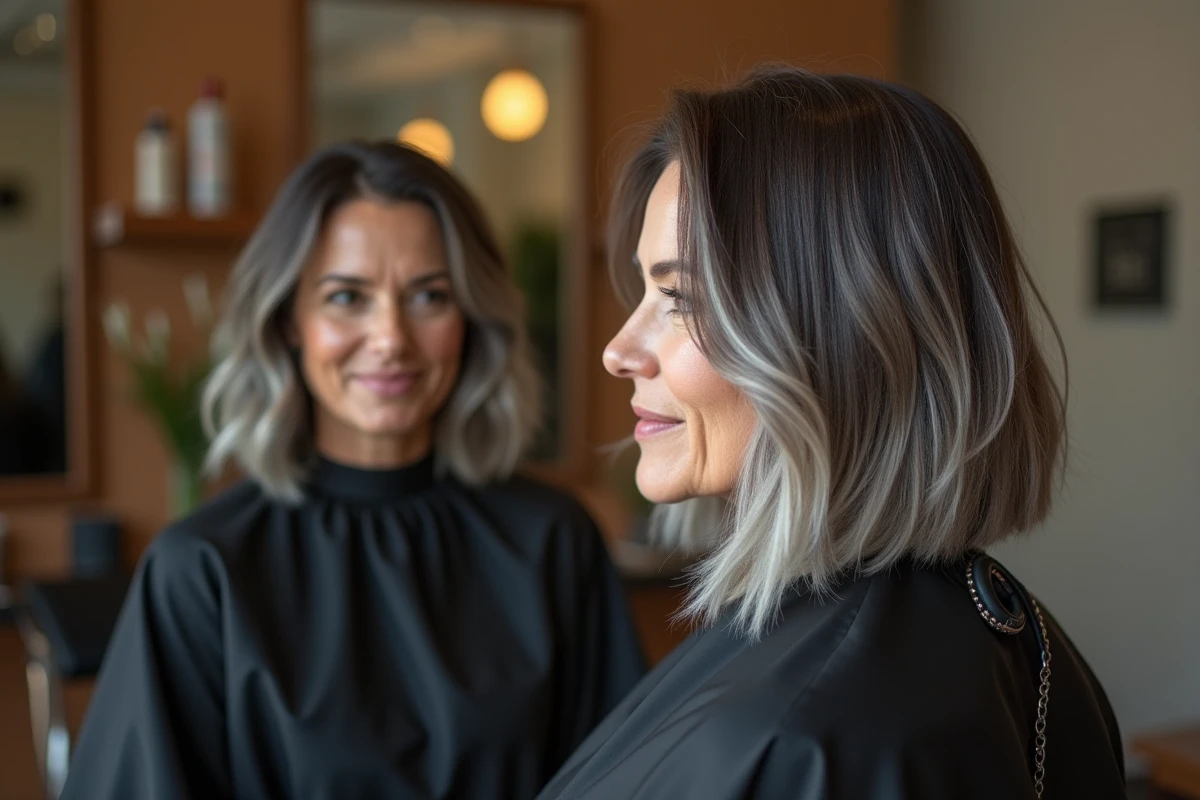
When the first gray hairs appear on a brown mane, the contrast is often stark. A white root on a dark base becomes noticeable within a few days, and the classic reflex, full coloring, traps one in a cycle of frequent touch-ups. Grey blending offers an opposite approach: instead of hiding the gray, it gradually integrates it into the existing hair through targeted lightening.
Why the brown base complicates the transition to gray
Have you ever noticed that a white strand stands out much more on dark brown than on ash blonde? This phenomenon is due to the brightness gap between the two shades. On a light base, the white hair blends almost naturally. On a brown base, it creates a sharp contrast that gives the impression of poorly maintained regrowth.
The dark permanent color used to cover these first grays exacerbates the problem with each regrowth. The darker and more pigmented the applied color, the more visible the demarcation line between the depigmented root and the colored lengths becomes. One enters a cycle: cover more, more often, with increasingly heavy formulations.
The grey blending approach breaks this cycle. Instead of applying an opaque veil over the entire hair, the colorist works with fine strands in lightening to bring the dark base closer to the tone of the white hair. The white stops being an intruder; it becomes an element of the gradient.
To better understand this mechanism, a detailed article explains how grey blending on brown hair transforms regrowth into an asset rather than a constraint.
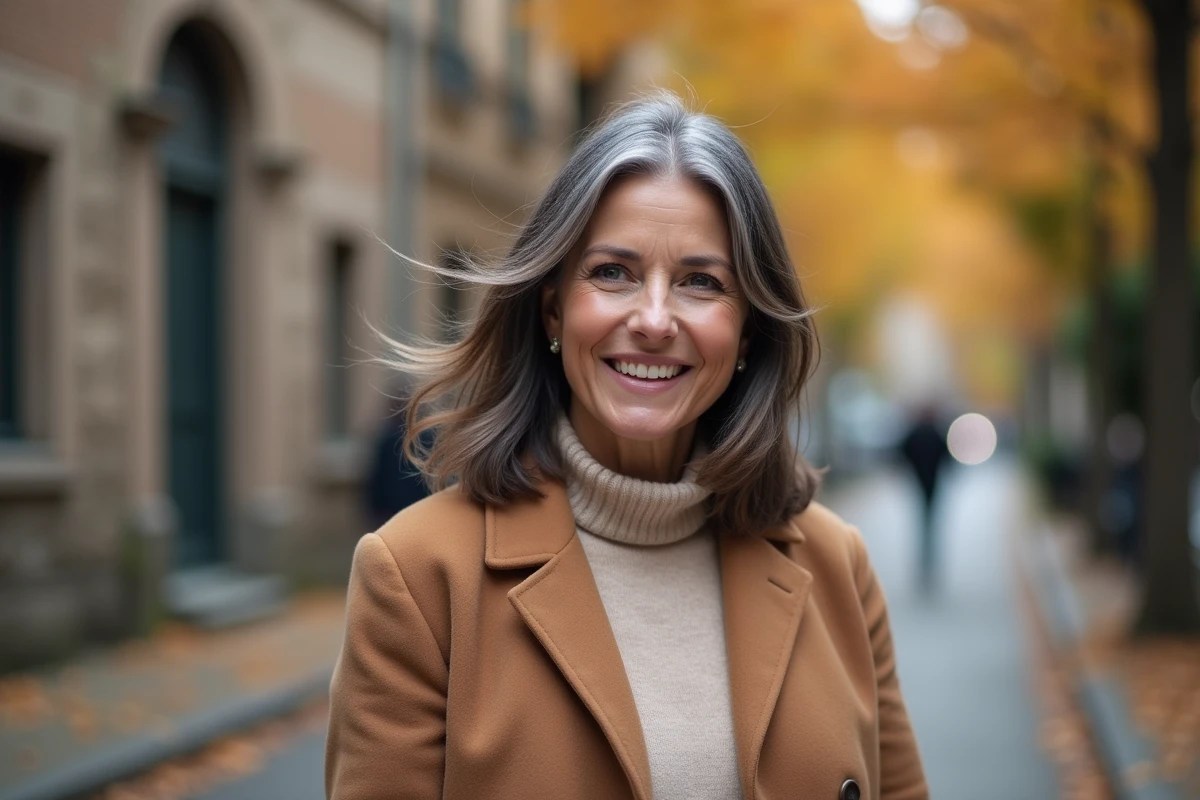
Grey blending on brown hair: what technically happens under the strand
The term “blending” means mixing, and that’s exactly what happens to the hair. The colorist selects fine sections, often around the face and on the top of the head, where the whites appear first in most brunettes.
These sections are lightened by a few shades, not up to platinum blonde, but enough to create a visual bridge between the natural brown and the white. The result resembles a balayage, with a particularity: the existing white hairs contribute to the final result instead of being covered.
The difference with a traditional balayage
A traditional balayage aims to create bright highlights on a uniform base. Grey blending, on the other hand, starts from the observation that the base is no longer uniform: it already contains white. The placement of the lightened strands takes into account the natural distribution of depigmented hair.
On a brunette whose whites mainly grow at the temples, the colorist will concentrate the work in this area to harmonize the transition. On another whose whites are diffuse, the pattern will be spread across the entire head. This tailored work explains why two grey blendings on brunettes never look the same.
Regulatory pressures on dark colorations and practical consequences
One aspect rarely addressed in hair articles concerns the evolution of the European regulatory framework. The European Chemicals Agency (ECHA) and the European Commission have tightened the evaluation of several oxidative hair dyes in recent years, particularly those used in dark formulations (PPD and PTD families).
These restrictions, regularly updated in the CosIng database, have concrete repercussions in salons:
- Some very covering dark shades are reformulated with less concentrated pigments, which can alter the result or hold on resistant white hair.
- Colorists are increasingly guiding their brunette clients towards “less pigmented” techniques, such as grey blending, which relies on lightening rather than applying dark color.
- The frequency of dark permanent color applications is an increasing concern for professionals keen to limit their clients’ cumulative exposure to these molecules.
This regulatory context enhances the appeal of grey blending for brunettes: fewer dark pigments applied, less often, with a result that ages better.
Maintenance rhythm and evolution over time on a brown base
With a full dark coloring, root touch-ups occur on average every three to four weeks. Grey blending significantly extends this timeframe because the white regrowth blends into the already present gradient.
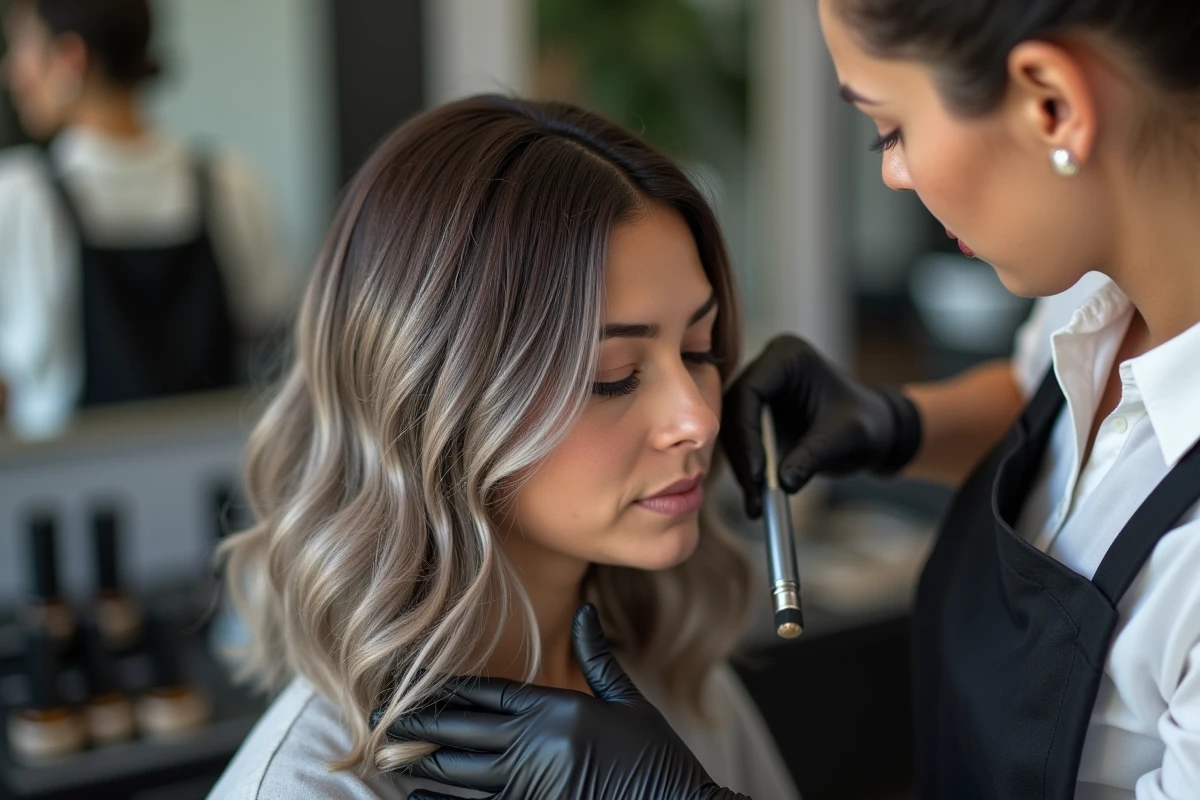
The first sessions may be closer together, especially if the hair starts from a very dark and heavily colored base. The colorist must first “open” the existing color gradually before applying the final strand pattern. Expect two to three appointments to establish the initial gradient on a brunette coming from a full permanent coloring.
What changes over the months
Once the grey blending is established, each new growth of white hair naturally integrates into the gradient. Touch-ups become less frequent. Some clients switch to a rhythm of two to three visits per year, compared to about twelve with traditional coloring.
The result also evolves: as the percentage of whites increases, the contrast decreases and the gradient becomes softer. Grey blending on brown hair functions as a living technique, that adapts to the natural evolution of the hair rather than freezing it in an artificial shade.
The marked increase in requests for grey blending among brunettes in urban salons over the past few years confirms a shift in mentality. The transition to white hair is no longer seen as a surrender, but as a technical choice that requires as much skill as a sophisticated coloring, with the advantage of freeing up time and preserving hair fiber in the long term.